
Legal Help After a Child Molestation Allegation in Northwest Indiana
A child molestation or child sexual abuse allegation in Indiana can place a person under immediate legal, personal, and public pressure. The case may begin with a police report, a child services referral, a school disclosure, digital messages, witness statements, or a request for an interview before charges are filed.
Stracci Law Group defends people accused of serious sex offenses in Crown Point, Lake County, and communities across Northwest Indiana. A skilled Indiana child molestation defense lawyer from our team will listen to you, review the accusation, evaluate police investigative procedures, examine digital or witness evidence, and protect your rights at each stage of the case.
If you need an Indiana child molestation attorney for a pending charge or an active investigation, call Stracci Law Group at 219-525-1000 for a confidential consultation.
First Steps After a Child Molestation Accusation in Indiana
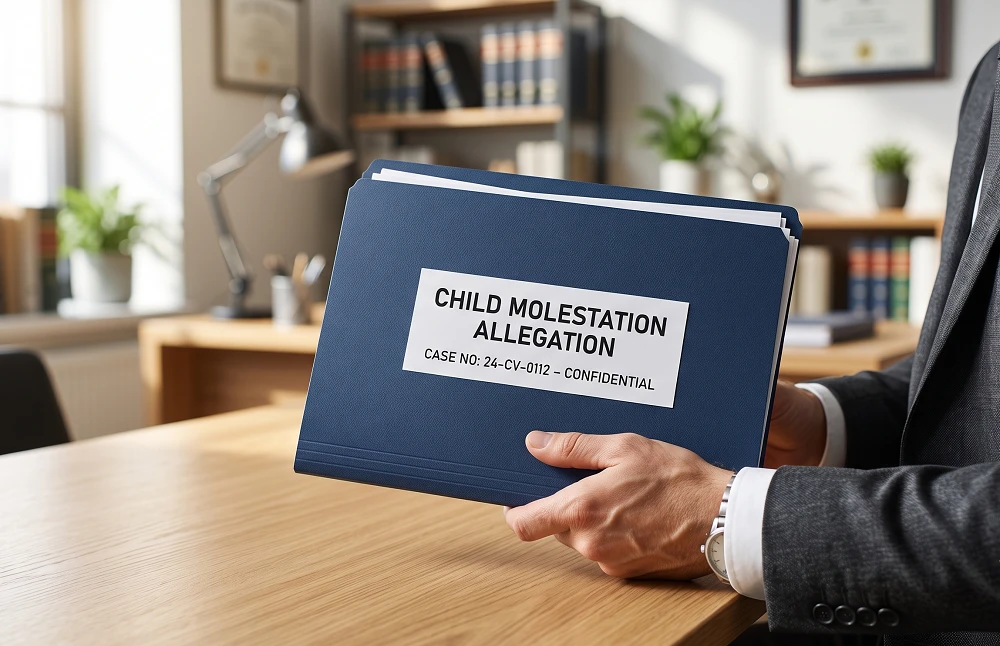
Being accused of a child sex offense is one of the most serious criminal charges someone could face. Just the accusation alone, even one with no supporting evidence, could destroy someone’s life. If you know you are under investigation before any formal charges are filed, you need to take this seriously, be proactive, and contact us as soon as possible.
- Do not answer police questions alone: Statements made during an informal conversation may become evidence.
- Do not contact the accuser or the accuser’s family: Calls, texts, direct messages, or third-party messages can create new legal problems.
- Preserve records: Save texts, emails, call logs, social media messages, location data, photos, receipts, and names of possible witnesses.
- Do not post about the case online: Social media posts can be reviewed by investigators, prosecutors, or witnesses.
- Contact a defense attorney early: Early legal action may affect interviews, evidence review, search issues, and pre-charge strategy.
How Police and Prosecutors Build Child Sex Offense Cases
Child molestation and child sexual abuse cases may begin with a report, interview, digital record, or agency referral. Police and prosecutors may gather records before filing charges or preparing for court.
Statements and Reports
The State may review statements from the accuser, family members, school staff, medical providers, counselors, school resource officers, or other witnesses, as well as school, medical, child services, employer, or law enforcement reports.
Forensic Interviews and Agency Records
Some cases involve forensic interviews, child advocacy center records, Department of Child Services documents, or recorded conversations. These materials should be checked for accuracy, context, methods, and consistency.
Phones, Social Media, and Digital Evidence
Police may seek texts, phone data, social media records, photos, videos, location data, search history, account records, or deleted messages. Digital evidence should be reviewed for dates, authorship, completeness, and collection methods.
Search Warrants and Police Procedure
An investigation may involve search warrants, consent searches, recorded interviews, device seizures, or account access requests. An Indiana child molestation attorney may review whether police acted lawfully and whether the evidence supports the charge.
The State must prove each required element beyond a reasonable doubt, including the child’s age, the accused’s identity, the alleged conduct, the required intent, and any aggravating facts. An accusation alone is not a conviction, so your criminal defense attorney will review whether the evidence supports each element and whether the police followed constitutional rules.
False Accusations in Indiana Child Molestation Cases

Not every false accusation begins with a deliberate lie. In child molestation and child sexual abuse cases, an allegation may arise from confusion, outside pressure, family conflict, or an incomplete investigation. The defense should examine how the accusation started and whether the evidence supports the charge.
Possible issues in a false accusation case may include:
- Mistaken statements: A child or witness may misunderstand, misremember, or misstate what happened.
- Misinterpreted conduct: Innocent contact, family interactions, or unclear events may be viewed as criminal conduct.
- Outside influence: A child’s statement may be affected by repeated questioning, leading questions, adult pressure, or conversations with others.
- Custody or family conflict: Divorce, custody disputes, household tension, or family disagreements may affect how an allegation is reported or interpreted.
- Changed accounts: Differences in timelines, locations, descriptions, or details may affect the reliability of a statement.
- Lack of supporting evidence: Some accusations may lack supporting evidence from digital records, medical findings, witness testimony, or other corroborating evidence.
- Incomplete investigation: Police or agency records may omit context, alternative explanations, or evidence favorable to the accused.
An accusation alone does not decide guilt. Our knowledgeable Indiana child molestation defense lawyer can review police reports, forensic interviews, digital records, medical evidence, witness statements, family history, and the timeline of events to determine whether the State can prove the charge beyond a reasonable doubt.
Indiana Child Molesting Charges and Penalties
After an investigation, prosecutors decide what charge level fits the alleged conduct. Under the Indiana child molesting statute, child molesting can involve sexual intercourse, other sexual conduct, fondling, or touching with a child under 14, depending on the facts and required intent. All convictions carry mandatory sex offender registration.
Indiana child molesting may be charged at different felony levels, 1 through 4:
- Level 4 felony: Fondling or touching involving a child under 14 with intent to arouse or satisfy sexual desires, absent aggravating factors. A Level 4 felony generally carries a sentence of 2 to 12 years in prison, and fines up to $10,000. A Level 4 allegation may rise to Level 2 when statutory aggravating factors apply, such as deadly force, use of a deadly weapon, or drug facilitation.
- Level 3 felony: Sexual intercourse or other sexual conduct with a child under 14. A Level 3 felony generally carries a sentence of 3 to 16 years in prison, and a fine up to $10,000. A Level 3 allegation may rise to Level 1 when statutory aggravating factors apply, such as offender age 21 or older, deadly force, use of a deadly weapon, serious bodily injury, drug facilitation, or transmission of a serious sexually transmitted disease.
- Level 2 felony: Fondling or touching with intent to arouse or satisfy sexual desires involving a child under 14 years of age. Elevates to a Level 2 felony if committed using or threatening deadly force, while armed with a deadly weapon, or by drugging the victim without their knowledge. A Level 2 felony generally carries a sentence of 10 to 30 years in prison, with fines up to $10,000.
- Level 1 felony: Sexual intercourse or other deviate sexual conduct with a child under 14 years old. Aggravating factors are charged if the offender is at least 21 years old, the act involved deadly force, resulted in serious bodily injury, used drugs to facilitate the crime, or transmitted a serious sexually transmitted disease. A Level 1 felony generally carries a sentence of 20 to 40 years in prison, with a fine of up to $10,000.
Sentencing depends on various factors including but not limited to the charge level, criminal history, plea terms, trial result, aggravating factors, mitigating factors, and judicial findings.
Facing a Child Molestation Charge?
The charge level, evidence, alleged timeline, and police procedure can affect the defense strategy. Stracci Law Group can review the case and discuss what comes next.
GET YOUR FREE CONSULTATIONRelated Charges for Sexual Misconduct with a Minor and Child Solicitation
Some child sex offense cases include related charges instead of, or in addition to, child molesting. Prosecutors may file these charges based on the child's age, the accused's age, the alleged conduct, digital communications, prior history, or aggravating facts.
Sexual Misconduct with a Minor
Under the Indiana sexual misconduct with a minor statute, a person at least 18 years old may be charged for sexual intercourse, other sexual conduct, fondling, or touching involving a child under 16.
Sexual misconduct with a minor may be charged at different felony levels:
- Level 6 felony: Fondling or touching involving a child under 16 with the required sexual intent.
- Level 5 felony: Fondling or touching when the accused person is at least 21, or sexual intercourse or other sexual conduct involving a child under 16 by a person at least 18.
- Level 4 felony: Sexual intercourse or other sexual conduct when the accused person is at least 21.
- Level 2 felony: Certain touching allegations involving deadly force, a deadly weapon, or drug facilitation.
- Level 1 felony: Certain sexual intercourse or other sexual conduct allegations involving deadly force, a deadly weapon, serious bodily injury, or drug facilitation.
Indiana law also lists limited defenses in some sexual misconduct with a minor cases, such as reasonable belief that the child was at least 16, a marriage-related defense, and a close-in-age defense. These defenses depend on the exact charge and every statutory requirement.
Child Solicitation
Under the Indiana child solicitation statute, child solicitation can involve a person who asks, commands, urges, incites, requests, or advises a child, or someone believed to be a child, to engage in sexual intercourse, other sexual conduct, fondling, or touching.
The alleged solicitation may occur:
- In person
- By phone or wireless device
- In writing
- Through a computer network
- Through an advertisement
- By another method
Child solicitation generally applies when a person at least 18 is accused of soliciting a child under 14, or when a person at least 21 is accused of soliciting a child who is at least 14 but under 16. The charge is generally a Level 5 felony, but it may rise to a Level 4 felony if the allegation involves computer-network conduct plus travel to meet, or a prior unrelated child solicitation conviction.
Like child molesting and sexual misconduct with a minor, a child solicitation conviction may also lead to sex offender registration, “offender against children” restrictions, and additional long-term reporting duties.
Long-Term Consequences of an Indiana Child Molestation Conviction

A conviction can affect more than the sentence imposed by the court. Depending on the charge and outcome, a person may face:
- Restitution: The court may order payment for certain losses connected to the case.
- Probation restrictions: Probation may include supervision, treatment, reporting duties, travel limits, and other court-ordered terms.
- No-contact orders: The court may prohibit contact with the complainant, the alleged person’s family, or other protected people.
- Credit-restricted felon classification: Certain convictions may affect how credit time is earned during incarceration.
- Sex offender registration: A conviction may require registration through the Indiana Sex and Violent Offender Registry.
- Residence limits: Registration or probation terms may restrict where a person can live.
- Employment limits: A conviction may affect job options, professional licenses, background checks, and work near minors.
- Travel restrictions: Probation, parole, or registry duties may require approval or notice before travel.
- Restrictions on contact with minors: Court orders, probation terms, or registry rules may limit contact with children.
These consequences should be reviewed early because they may affect plea negotiations, trial strategy, sentencing arguments, and post-conviction options.
Defense Options Before and After Charges Are Filed
A defense strategy may begin during an investigation or after an arrest. The available options depend on the charge, evidence, witness statements, digital records, police procedures, and the facts of the case.
- Pre-charge review: Counsel may assess police contact, interview requests, search issues, and agency involvement before charges are filed.
- Discovery review: After charges are filed, the defense may review police reports, forensic interviews, digital evidence, medical records, witness statements, and agency records.
- Witness investigation: The defense may examine timelines, motives, inconsistencies, outside influence, and facts that may affect credibility.
- Suppression motions: Evidence or statements may be challenged if police violated constitutional rights during questioning, searches, seizures, or access to devices.
- Evidentiary challenges: The defense may challenge unreliable statements, incomplete records, improper interview methods, or issues with digital evidence.
- Plea negotiations: Some cases may involve negotiations focused on charge reductions, sentencing exposure, registration consequences, probation terms, or other case-specific risks.
- Trial preparation: If the case proceeds to trial, the defense may prepare witness examinations, evidence objections, expert issues, jury instructions, and arguments regarding the State’s burden of proof.
- Sentencing advocacy: If a conviction occurs, the defense may present mitigating facts, treatment records, character evidence, lack of criminal history, and other information relevant to sentencing.
Stracci Law Group can review the accusation, examine the evidence, and develop a case plan based on the charge and the client’s circumstances.
Why Work with Stracci Law Group for Child Molestation Defense
Child molestation allegations require immediate attention, careful evidence review, and a defense plan based on the specific facts of the case. Stracci Law Group represents clients in Crown Point, Lake County, and across Northwest Indiana in serious state sex offense matters.
- Criminal defense focus: Our team handles serious felony cases involving child molesting, sexual misconduct with a minor, child solicitation, and related sex offense allegations.
- Former prosecutor insight: Several attorneys at Stracci Law Group have prosecution backgrounds, were former founders and members of the Lake County Special Victims Unit, which can help the defense evaluate how the State may review evidence, witnesses, and charging decisions.
- Case-specific evidence review: We examine police procedure, forensic interviews, digital records, witness statements, timelines, and constitutional issues to determine what defense options may apply.
Take Action Before the Case Builds
Police and prosecutors may already be collecting statements, records, and digital evidence in order to lock in their version of the story. Stracci Law Group can review the accusation and make sure your rights are protected.