


Federal Firearm Defense from a Crown Point Gun Crime Attorney
Two ATF agents knocking on your door or a phone call about a gun traced back to your name is often how a federal firearms case starts, weeks before anyone is arrested. Federal authorities take firearm violations very seriously in Northwest Indiana, where ATF, the FBI, the DEA, and the Department of Homeland Security commit significant resources to stopping the flow of firearms from Indiana into Chicago, and a conviction can mean a life-changing sentence.
If you are accused of using another person to buy a gun for you, buying a gun for someone who cannot do so on their own, selling or manufacturing firearms without a license, possessing a firearm as a prohibited person, or any other federal gun crime, the experienced Northwest Indiana gun crime attorneys from Stracci Law Group will fight to protect your rights. Call us at (219) 525-1000 for a free consultation.
Our Crown Point Gun Crime Lawyers Can Handle Your Case
Federal gun laws reach far beyond the stereotype of someone caught with an illegal weapon during a traffic stop. Below are some of the federal firearm charges that our Northwest Indiana gun crime lawyers most often defend against.
Straw Purchase of Firearms — 18 U.S.C. §922(a)(6), §924(a)(1)(A)
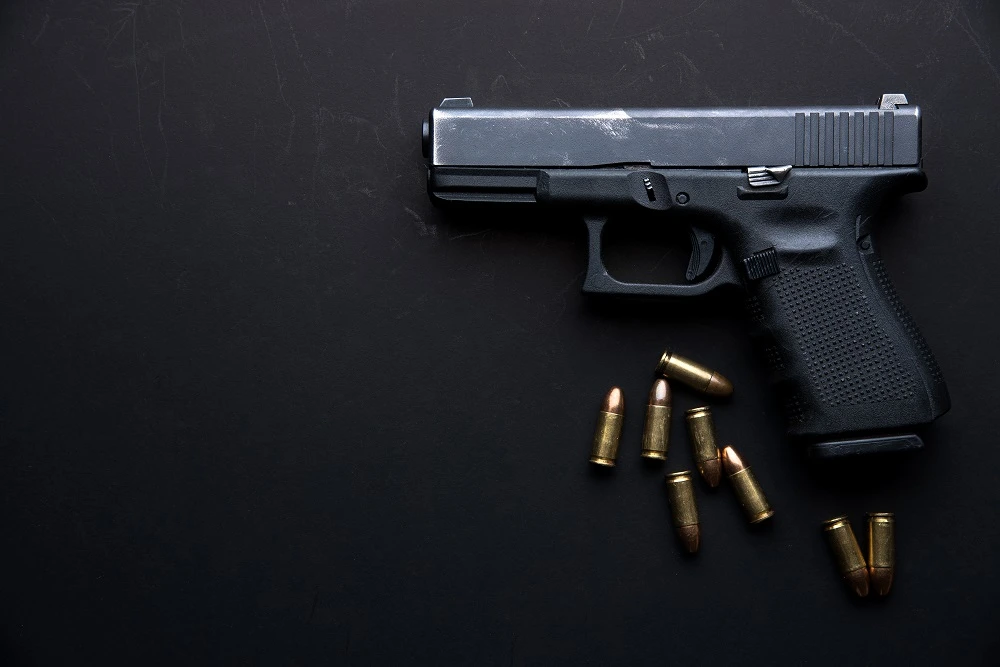
A straw purchase occurs when the real buyer of a firearm uses or gives money to another person, called a "straw purchaser", to buy firearms from a federally licensed dealer on their behalf. The straw purchaser goes to the gun store, fills out the federal forms, and buys one or more guns for the real buyer, who is often a convicted felon, fugitive, illegal alien, or other individual prohibited by law from buying or possessing a firearm.
Possession of a Firearm by Convicted Felon — 18 U.S.C. §922(g)(1)
Federal gun laws prohibit a number of individuals from receiving or possessing a firearm. It is a federal felony for a convicted felon to possess a firearm, regardless of how briefly or under what circumstances.
Possession of a Firearm by a Prohibited Person — 18 U.S.C. §922(g)
Fugitives, unlawful drug users, undocumented immigrants, dishonorably discharged veterans, and domestic violence offenders are federally barred from possessing firearms. Also, giving a firearm to someone who fits one of these categories is a crime, too.
Possession of a Firearm by an Illegal Alien — 18 U.S.C. §922(g)(5)
In most circumstances, it is a federal criminal felony for persons illegally or unlawfully in the United States to possess firearms or ammunition. Federal prosecutors frequently pursue this charge alongside a separate immigration violation, adding to the stakes of any conviction.
Possession of a Firearm After Domestic Violence Conviction — 18 U.S.C. §922(g)(9)
Federal law prohibits persons convicted in any court of a crime of domestic violence from receiving or possessing firearms and ammunition. This bar can apply even when the underlying conviction was years ago and no jail time was ever served, which catches many people by surprise.
Possession of a Firearm With Obliterated Serial Number — 18 U.S.C. §922(k)

Crossing state lines with a firearm that has a removed, obliterated, or altered serial number is a federal felony offense. The charge often accompanies other firearm allegations, since altering a serial number is frequently used to disguise a stolen or trafficked weapon.
Possession of a Machine Gun — 18 U.S.C. §922(o)
Federal law also prohibits the possession or transfer of a variety of guns, including a machine gun, its frame, and its receiver. A "machine gun" is defined under federal law as any weapon that shoots, is designed to shoot, or can be readily restored to shoot, automatically more than one shot, without manual reloading, by a single function of the trigger.
Possession of a Stolen Firearm — 18 U.S.C. §§922(i)-(j)
It is illegal under federal law to receive, possess, conceal, store, barter, sell, pledge, accept as security for a loan, or transport across a state line any stolen firearm or explosive material.
Using Firearms to Commit Federal Crimes — 18 U.S.C. §924(c)
It is also a crime for a person to possess, brandish, or use a firearm during or in relation to the commission of a federal crime of violence or federal drug trafficking crime. This charge carries its own mandatory sentence that must run consecutive to the sentence for the underlying offense.
Less Common Firearm Offenses
You can also trust a Stracci Law Group Crown Point gun crime attorney for cases that are less frequently seen, including:
- Importing, producing, or conducting firearm transactions without a valid license.
- Transporting certain destructive devices.
- Delivering, transporting, or accepting firearms with serial numbers that have been removed, altered, or destroyed.
- Possessing or discharging a firearm in a school zone.
- Selling, delivering, or transferring a firearm to a juvenile.
- Knowingly possessing or manufacturing illegal firearms and weapons, such as fully automatic firearms, sawed-off shotguns, and rifles of certain barrel or overall length.
Federal Gun Crime Penalties
Penalties for federal gun crimes depend on the charge and the defendant's record. Straw purchase and prohibited-person offenses typically carry no minimum but up to 15 years, and exposure climbs sharply once a firearm is tied to another federal crime or a prior conviction. Because federal and state courts handle firearms cases so differently, this is best reviewed with an experienced Northwest Indiana federal gun law attorney.
Mandatory Minimums Under 18 U.S.C. §924(c)
If you are charged with possessing, brandishing, or using a firearm while committing a crime of violence or a drug trafficking crime, mandatory prison terms come into play, and the sentence must run consecutive to the sentence for the underlying offense:
- Possession of a firearm during the crime: 5-year minimum
- Brandishing the firearm: 7-year minimum
- Discharging the firearm: 10-year minimum
The Armed Career Criminal Act (ACCA) — 18 U.S.C. §924(e)
Those convicted of prohibited person offenses under 18 U.S.C. §922(g) who also have prior violent felony or serious drug convictions may face enhanced penalties. The ACCA mandates a minimum 15-year prison sentence for anyone convicted of a §922(g) offense who has three prior convictions for either a violent felony, a serious drug offense, or both.
How Federal Prosecutors Build a Gun Crime Case
Federal firearm investigations are rarely built overnight, and by the time charges are filed, agents have often gathered records for months. Understanding how that file comes together is the starting point for challenging it.
Purchase Records and Dealer Documentation
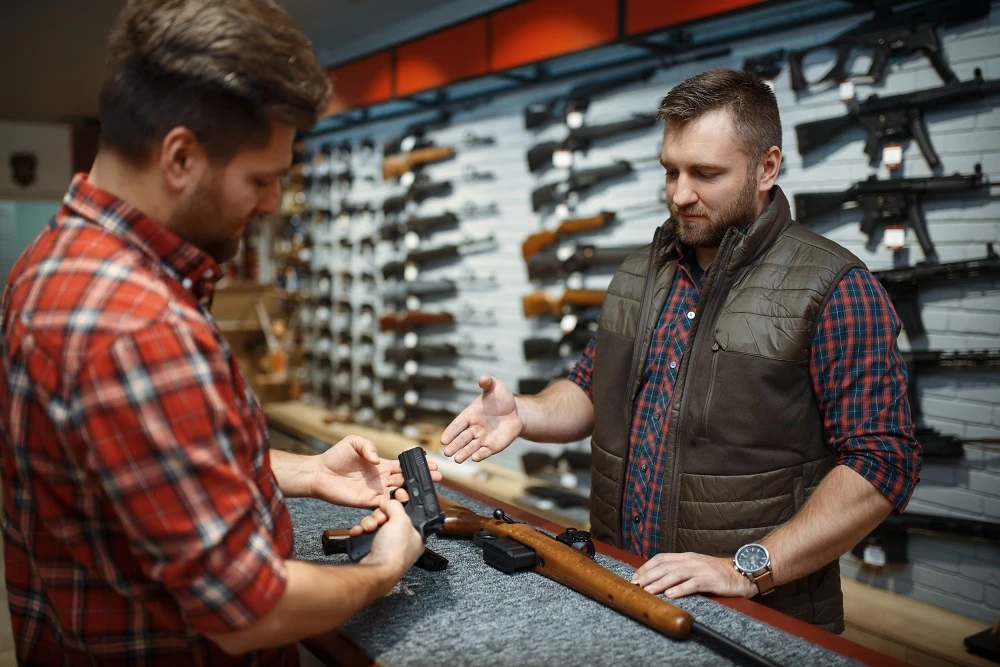
ATF agents and federal prosecutors frequently start with a licensed dealer's federal purchase forms, tracing which buyer's signature appears on the paperwork and whether that person matches the individual who actually walked out with the firearm.
Surveillance and Controlled Buys
Task force investigations, including joint ATF and Chicago-area operations that affect Northwest Indiana sellers, often rely on surveillance, recorded communications, and controlled purchases conducted by undercover agents posing as buyers.
Digital Evidence and Communications
Text messages, call records, and social media posts are commonly used to establish that a seller knew a firearm was headed to a prohibited buyer or across state lines. Our Crown Point gun crime attorneys review how that evidence was collected and whether it was obtained in a manner consistent with the Fourth Amendment.
What to Do If You're Under Investigation for a Federal Gun Crime
A federal firearms investigation can begin well before any charge is filed, often with a knock at the door or a call from an ATF agent. What happens in the first conversation can shape the entire case.
- Do not answer questions without an attorney present. Statements that feel routine to an agent can become the strongest evidence against you.
- Do not discuss the purchase, sale, or transfer with anyone else involved. Coordinating a story after the fact can create a separate problem with obstruction.
- Preserve your own records. Save receipts, messages, and any documentation showing how a firearm changed hands.
- Stay off social media about the investigation. Posts can be reviewed by agents, prosecutors, and witnesses.
- Call a federal gun crime attorney early. Early involvement can affect whether charges are filed at all, and at what level.
Why Choose Stracci Law Group as Your Northwest Indiana Gun Crime Attorney
Stracci Law Group brings a eight-attorney team to every federal firearms case, five of whom previously worked as prosecutors and three of whom have spent their careers exclusively on the defense side. With more than 80 years of combined courtroom experience across both sides of the aisle, our team understands how ATF agents, U.S. Attorneys, and federal judges in the Northern District of Indiana actually approach a gun crime case, not just how the statute reads on paper.
- Local and federal court experience across Crown Point, Lake County, Porter County, and the broader Northern District of Indiana.
- Former prosecutor insight into how the government builds a straw purchase, trafficking, or prohibited-person case.
- A full team approach, so every client benefits from more than one attorney's read on the evidence.
- Free, confidential consultations to review the charge and lay out a clear, transparent plan before representation begins.
Know What You're Facing Before You Talk to Anyone Else
The charge you're facing determines the penalty, and the penalty determines everything that comes next. Stracci Law Group can review your case and lay out what's actually at stake before you make another move.
Facing a Federal Gun Charge in Northwest Indiana?
Our skilled Northwest Indiana firearm defense attorneys will use our advanced knowledge to review the charge, the evidence, and the search or seizure that led to it before you speak with another investigator.

-p-500.avif)

.avif)
-p-500%20(1).avif)

.avif)


.svg)